Category: Sheep

The Importance of Colostrum for Newborn Ruminants

No Comments
A Ewe And Two Lambs Juliette Peyrol-Bonheur (French, 1830–1891)

Colostrum, the first milk produced by the mother after giving birth, is essential for the survival and health of newborn ruminants such as calves, lambs, and kids. It differs significantly from regular milk due to its high concentration of nutrients, antibodies, and other bioactive compounds. Here’s why colostrum is crucial:


1. Passive Immunity Transfer


Newborn ruminants are born without a fully functional immune system and lack maternal antibodies. Colostrum provides immunoglobulins (primarily IgG), which offer passive immunity against pathogens present in the environment. This immunity protects the young animal until its own immune system matures and begins producing its own antibodies.


2. Rich Nutritional Content


Colostrum contains higher levels of proteins, fats, vitamins (A, D, and E), and minerals compared to regular milk. These nutrients are vital for energy, growth, and the development of critical organs, particularly the gastrointestinal system.


3. Gut Health and Development


The bioactive compounds in colostrum, such as growth factors, help in the development of the gastrointestinal tract. These compounds stimulate cell growth, repair intestinal tissues, and enhance nutrient absorption.


4. Disease Prevention


The antibodies and antimicrobial factors in colostrum, such as lactoferrin and lysozymes, protect newborns from bacterial, viral, and fungal infections. This is especially important in the early days when the animal is highly vulnerable to diseases.


5. Energy Supply


Newborn ruminants have low energy reserves at birth. Colostrum provides a concentrated source of energy, particularly from fats, which is crucial for thermoregulation and physical activity in the first hours of life.


6. Timing is Critical


The ability of the newborn’s intestine to absorb immunoglobulins decreases rapidly after birth, with the most efficient absorption occurring within the first 6-12 hours. By 24 hours, the gut closure process significantly reduces the uptake of these antibodies. Therefore, ensuring the newborn consumes sufficient colostrum as soon as possible is critical.


7. Quality and Quantity

Quality: High-quality colostrum has a high concentration of immunoglobulins and is free from contamination. Testing tools like a colostrometer or Brix refractometer can help assess colostrum quality.

Quantity: The general guideline is that newborns should consume about 10% of their body weight in colostrum within the first 12 hours of life.


Conclusion


Colostrum is more than just the first milk; it is a lifeline for newborn ruminants. Proper management of colostrum feeding—focusing on quality, quantity, and timing—is essential for ensuring the health, survival, and long-term productivity of young ruminants. Livestock producers must prioritize colostrum management to maximize the benefits for their herds or flocks. 

Recommended Reading from the Brian Hurlburt Bookshop: 
 

Briden Farm At the Manger on Christmas Day 2024

1 Comment
Sheep

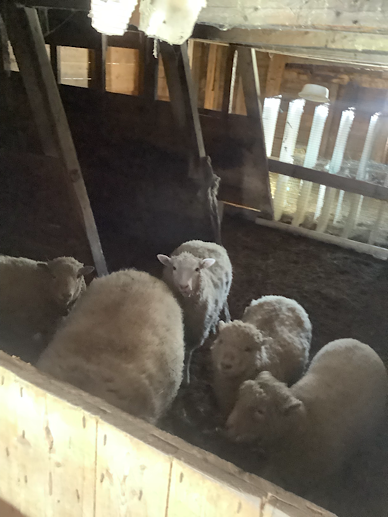
Briden Farm Sheep at the Manager on Christmas Day 2024. 

If you look close You might even see our little Goat, Patsy. 

Baaabara

Likes the limelight and she makes it difficult to get photos of …

The Other Sheep 

Here we have the “Littles” …

And one last photo…

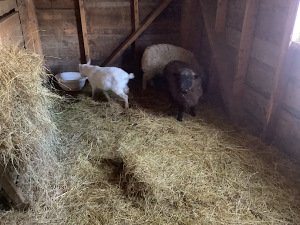
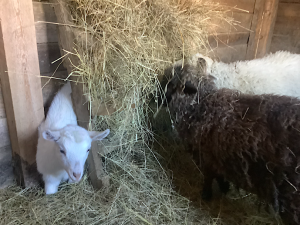
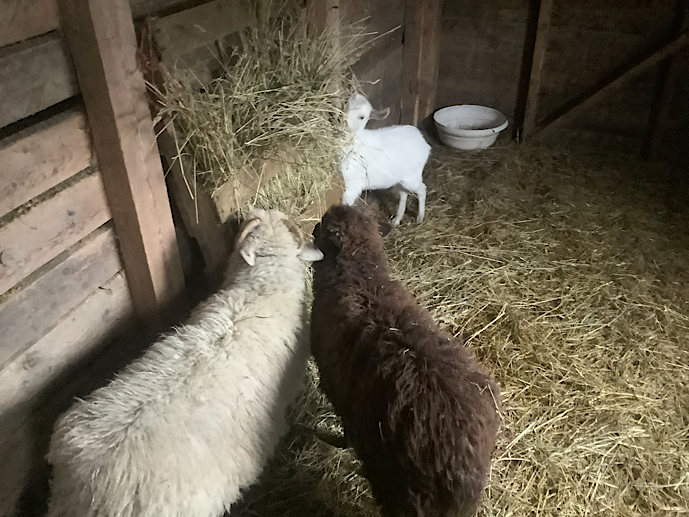
The little sweetheart on the left is Patsy, our little doeling goat, born 18 Aug 2024..next to her is Ebony, our little ewe Black sheep, who was born outside last March, 2024. The white sheep next to Ebony is Briden our little Bottle Baby boy from late last Winter! Unfortunately I forgot to get a photos of the other goats till after I’d fed them and closed their section of the barn back up.

Hope You All had a Happy Christmas! 


Remember to Get Your Free Copy of “Trust Your Tummy” 

Yes! It’s Free! 
Merry.Christmas From HelpfulHerbal.com


Moving our Animals inside for Winter

2 Comments
Briden, Ebon, and Patsy

Here in Nova Scotia we sometimes have up to six feet of snow and temperatures as low as -25°C or 13°F. Actually colder in some Northern parts of the Province! So, that means our animals need shelter for Winter. 

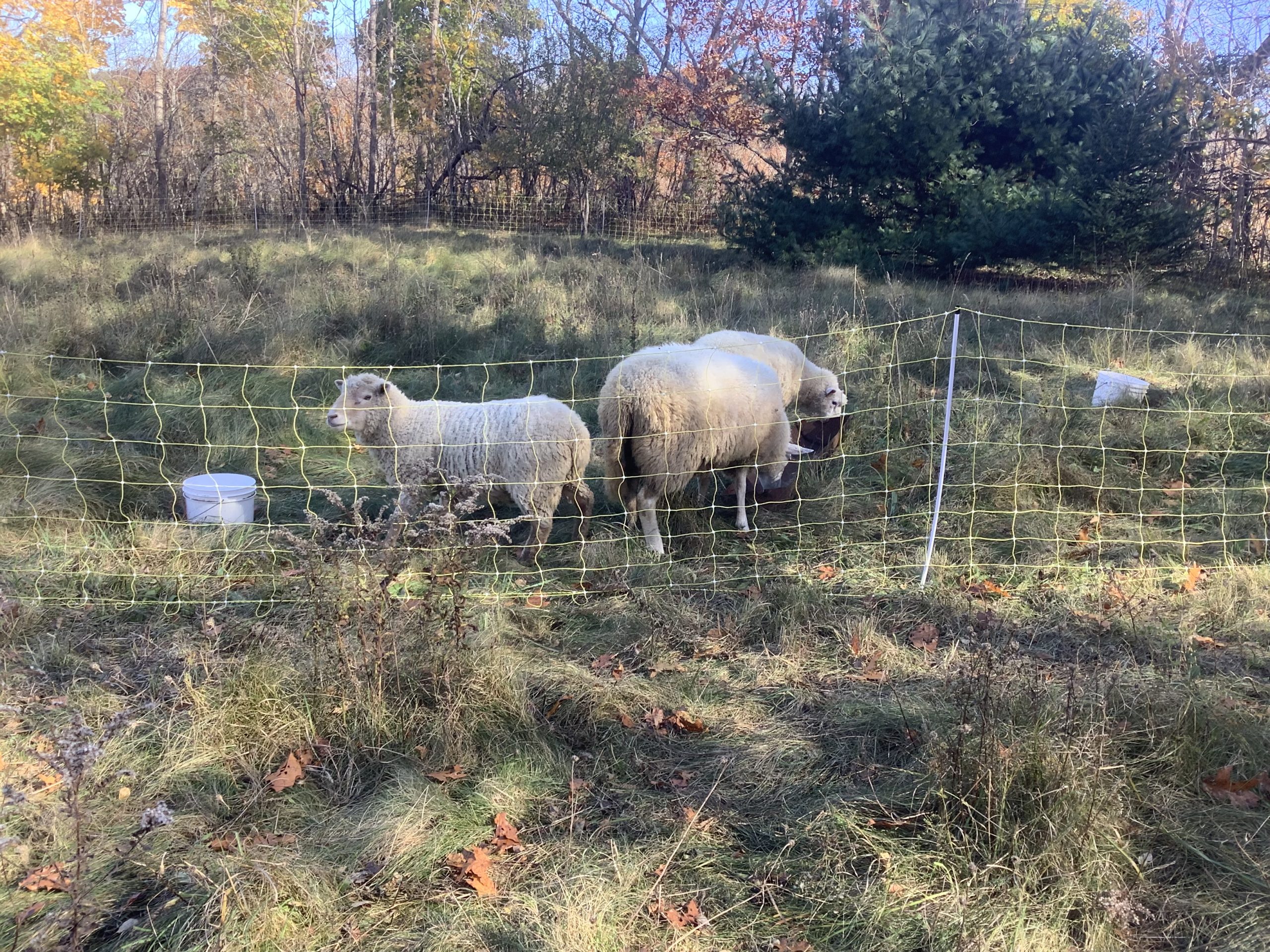
To be honest, it actually saves us time, once we get them all moved in. For most of the year, from Spring to Fall, sometimes even into Winter, all our critters get moved on a pretty regular basis. Usually every week, or so, they get moved to a new pasture. The rule of thumb is to move Goats at least every 30 days, Pigs at least every two weeks, and SHEEP!!! Sheep need to be moved every 4 Days! Ok! Why all this moving!? 

Here Briden Farm we keep everything natural and we don’t use antibiotics, chemical dewormers, or other drugs to medicate our critters unless they absolutely need it! In fact we haven’t used any since we began over four years ago!

That’s because by moving everyone on a regular basis, Goats at least every 30 days, Pigs biweekly, and Sheep every 4 Days, we stay ahead of the parasite cycle! See, with Sheep, their worms become infective on day 5. So we move them every four days, and they are on their new pasture, before their parasites get a chance to infect them! 

That’s just part of the system though! The other part is that once we move them, nothing gets back on the same piece of ground for at least 90 Days! That way the parasites have no Host to infect because they’ve moved before the parasites can infect them, and by not returning for at least 90 days, the parasites not only have nothing to live on, but die before our animals return to that area. Thus chemicals are not needed! Thus, all our critters live as natural as possible! 

The only time we give our animals anything other than fresh water and their grains is when they have a cut, or something like that. Up until recently we used Watkins Medicated Ointment and Petro Carbo Salve. However, Watkins recently decided to stop selling all their Non-Food items!

So, now, we’ll be using Rawleigh Medicated Ointment and Rawleigh Antiseptic Salve

Both of these good ole companies have produced these wonderful products for over 135 Years! 

Anyway, I digress, let’s get back to getting our livestock back inside for Winter!

Imagine, how laborious it is to move sheep every four days, pigs at least every couple weeks, and goats at least every month! Compound that by the number of pastures. Sometimes we have a half dozen pastures on the go at a time! All needing to be rotated on a regular basis!

Very tiring and time consuming! Sort of makes one think about why naturally raised, ethically treated, rotationally pastured pork, poultry, and other meat costs so much! Right? Usually our meat birds get moved at least once, or twice, a day!

So, once we get everyone moved inside for the Winter we sort of get a chance to rest! 

Now You know the Rest of the Story! 

Tupping! What on earth is it!?

No Comments
Tupping

This is a new Term for me, apparently I’ve been helping our sheep with the process, but I didn’t know that the term for it is Tupping, or that a Ram is called a Tup! Did You? No! Then read on…

When the cooler days of Autumn come upon us, the temperature outside goes down, but the Tups, start Tupping! So, what the heck is Tupping!? 

Tupping is when Rams, male sheep, also known as Tups, begin to feel the Call of the Wild! 

In the Wild, wild male ruminates, such as those in the deer family, are said to be in Rut. The Rut, when male wild ruminants seek out their mates, is similar to what domestic Rams, or Tups, do as Fall comes up on us, the urge to mate comes upon animals such a Sheep, Rams, known as Tups, enter a season of Tupping! 

This Tupping is, of course, in correspondence with the Ewes, female sheep, coming into what is known as Heat! So, when Autumn comes upon us, and the temperatures begin to Fall, wild animals begin their Rut, domesticated male sheep, Tups, begin Tupping, and as the temperatures Fall, things Heat up with the Ewes! 

So, Now You Know! Or is that Ewe Know! 😉