Today at Briden Farm: Many Hands, Lighter Hearts

No Comments
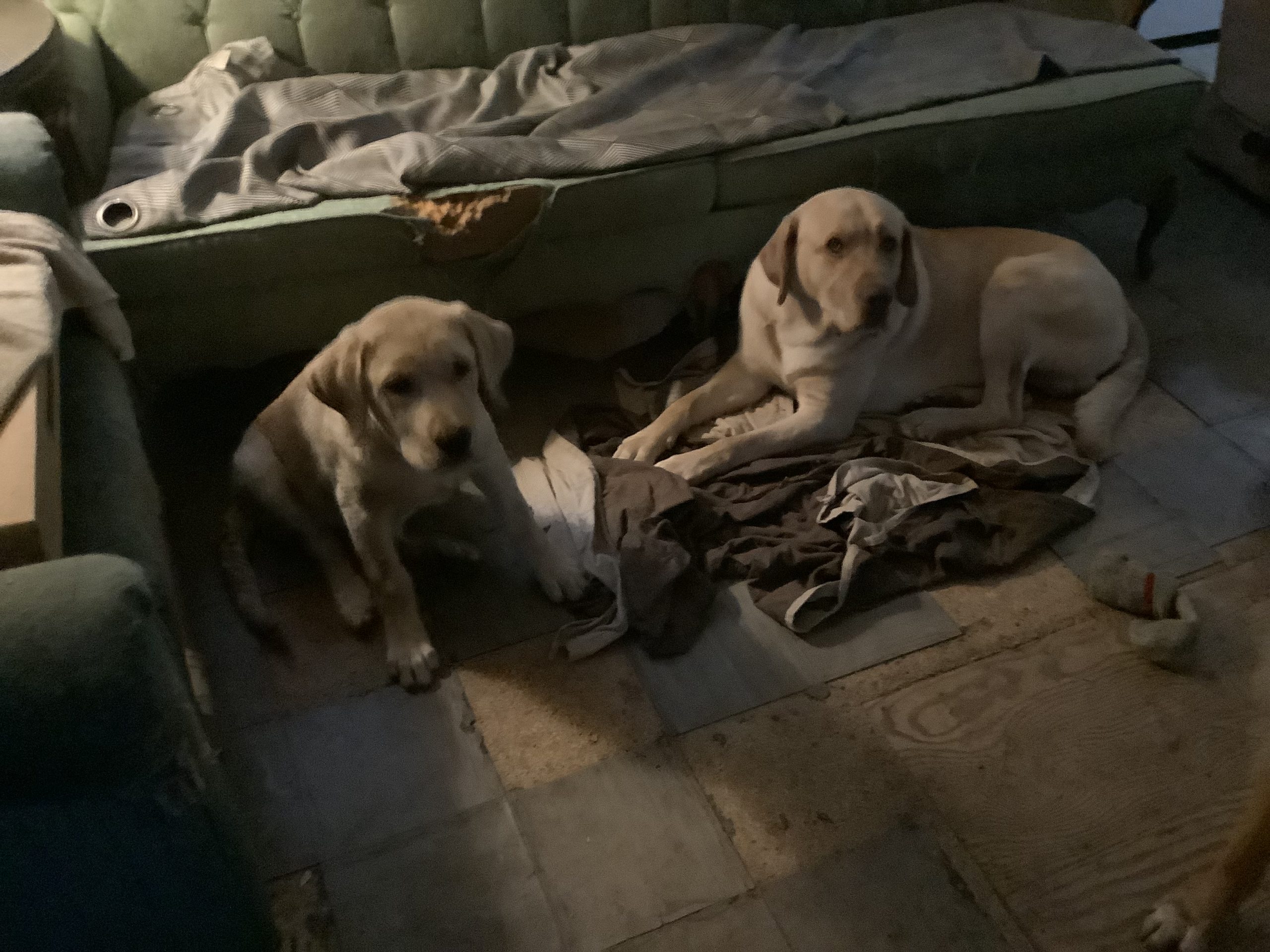
Roscoe lays on the floor

26 July 2026

Good evening from Briden Farm.

This morning began much as yesterday ended—with Roscoe.

After everything that happened yesterday, I was relieved to find him resting comfortably this morning. He didn’t head outside with the other dogs right away, which isn’t unusual for him. Instead, he came over and settled into one of his favourite places, under the footrest of my Lazy Boy, right at my feet.

I checked him over once again. He’s still limping, but he’s using the leg more than he was yesterday. His nose is cold and wet, his eyes are bright and alert, and while I’m sure he’s still sore, he seems to be telling me that he’s doing just fine. I’ll continue keeping a close eye on him over the coming days, but seeing him a little better this morning was enough to ease my mind.

With the last several days being so busy, I had planned for today to be a quieter Sunday.

I should know by now that the farm doesn’t pay much attention to my plans.

The regular chores still needed doing, but beyond those I was hoping to slow the pace a little.

Then there were those hay bales.

Before heading over to the barn, I left Roscoe at home where he could rest, with River staying behind to keep him company. Little Beau came along with me and proved to be excellent company all afternoon. At one point he managed to find the pond and came back looking considerably muddier than when he left, but before long he had cleaned himself up again. I suspect the cool water felt pretty good on a warm July afternoon.

The poultry and pigs ended up waiting a little longer because one job led to another, and before long I found myself tackling what had been weighing on my mind for several days—getting the rest of this year’s hay under cover.

Last night, while discussing different ways to move six and seven hundred pound round bales, someone suggested I go back to the old ways.

That simple comment stayed with me.

So that’s exactly what I did.

I went back to the beginning.

Back to the original helpmeet.

Actually…

I had two.

Never underestimate the power of a woman.

Today, Mary and Lynn came to help.

Now, I think both of them would probably tell you that I did most of the pushing and lifting, and they’re probably right. But that doesn’t diminish their contribution one bit.

When you’re moving something that weighs several hundred pounds, another set of eyes is every bit as valuable as another pair of hands. There were times when they helped steady a bale as it tipped. There were times when they helped roll it into position. There were times when simply having someone watching from another angle made all the difference in getting things lined up safely.

Using my shoulders, my back, my hips—whatever part of me would push—I worked each bale toward the tipping point, rolled it onto its side, then rolled it into its new home beneath the carport. Most of them were stood back upright so they’ll be easier to feed from this winter.

At one point I found myself chuckling.

When we started, I was convinced I was at least two pallets short.

By the time we finished, I somehow had three extra pallets.

After thinking about it, I suspect the mystery wasn’t much of a mystery after all. By using a few boards, a handful of bricks, and arranging the spacing between the bales more efficiently, we simply didn’t need as many pallets as I had originally thought.

Funny how solving one problem often solves another you didn’t even know you had.

By the end of the afternoon, every single hay bale was safely under cover.

I have to admit, standing there looking at them all lined up, I almost got a little emotional.

Yesterday I didn’t know how I was going to get it done. There had been more than a little worrying, a fair bit of fretting, and yes, more than a few prayers.

Then help arrived.

That weight I’ve been carrying for days simply disappeared.

To Mary and Lynn…

Thank you.

Your hands helped.

Your eyes helped.

Your encouragement helped.

And simply being there made all the difference.

After finishing up at the barn, I finally had a chance to sit down and enjoy the lamb that had been cooking all day in the slow cooker.

It turned out that what I thought was a roast was actually the second half of a crown of lamb. Fortunately, it didn’t seem to mind. Cooked slowly for nearly ten hours with tea, garlic, onion powder, rosemary, oregano oil, salt, liquid smoke, and just a little cooking liquid, the meat was tender and full of flavour.

Those ingredients weren’t chosen by accident. Over many years I’ve developed my own approach to cooking. I always strive for proper food handling and proper cooking methods first—nothing replaces those. But I also like choosing ingredients that not only complement one another in flavour, but have long histories of helping preserve food as well. Every little bit helps, and when good cooking meets good ingredients, the results are usually pretty rewarding.

I trimmed away the silver skin and excess fat after it had finished cooking, saving those trimmings for the dogs, then pan-fried strips of the lamb with a couple of baked potatoes left over from yesterday.

Simple food.

Good food.

The kind of supper that reminds you the best meals don’t have to be fancy.

As I write this, the chores are finished except for one last walk out at dusk to close up the coops for the night.

The hay is finally under cover.

Roscoe is resting comfortably at home.

The animals are fed.

And despite today not turning out to be the quiet Sunday I had imagined, I don’t think I would have wanted it any other way.

Sometimes the best days aren’t the easiest ones.

They’re the days that remind us that problems often have simpler solutions than we first imagine, and that life is a whole lot lighter when we don’t have to carry its heaviest loads alone.

Until next time…

Brian
Briden Farm 🌾🐑🐐🐖🐇🐓🐕

Today at Briden Farm: A Sickening Thud

No Comments
Large Round Hay Bales

25 July 2026 

The day started before seven this morning, thanks to the dogs. They all needed to go out, and while Beau has continued to do remarkably well settling back into life here on the farm, River decided that after coming back inside, what he really wanted was a little attention. He climbed up beside me, content to spend a few quiet moments together before the day’s work began.

After breakfast and cleaning up the kitchen, it was time to head to the barn.

The rabbits were looked after first, followed by the quail, then the goats. The sheep were due for another move, so I trimmed along the fence line, set up a new section of electric fencing, moved the flock onto fresh pasture, and then took the old fence back down so it would be ready for their next rotation. It’s a fair bit of work every few days, but fresh pasture is one of the keys to keeping healthy sheep and healthy land.

Back at the barn, I continued mixing yesterday’s feed into plastic barrels before any mice or other uninvited guests decided to help themselves. It’s one of those jobs that isn’t particularly exciting, but it saves feed and saves money.

Yesterday I managed to get about half of this year’s round bales under the carport, but the remaining bales are still waiting outside. Looking at them today, my mind started working on the next challenge.

There has to be an easier way.

Rather than trying to muscle 700-pound round bales, I’ve been thinking about using a chain hoist suspended from one of the overhead beams. Since the bales are sitting on pallets, I may only need to lift one edge of the pallet an inch or two—just enough to reach the tipping point and let leverage and gravity do the rest. It’ll have to be tested carefully, watching the beam every step of the way. If it doesn’t seem right, I’ll lower everything and find another method.

That’s one of the things farming has taught me.

You don’t always need more strength.

Sometimes you just need a better idea.

Then, in the middle of an ordinary afternoon, everything changed.

I was standing with my back to the road when I heard a sickening thud.

I turned around and saw Roscoe.

My heart sank.

After checking him over as carefully as I could, I couldn’t find any obvious injuries beyond a small scrape. He was favouring one hind leg, and I could see the shock in his eyes, but there was no crying, no flinching, and no obvious sign of broken bones. Mary drove us home with Roscoe riding in the truck. Once home, he settled onto his mattress with fresh food and water while I returned to the barn to finish the chores and bring Beau and River home.

I can tell you one thing.

Roscoe is more than a dog to me. He’s my son.

This evening, before turning in, I headed out one last time to close up the chicken coop.

Roscoe insisted on coming with me.

He was still limping, and I could tell there was still some pain there, but he was using that leg more than he had earlier in the day. His nose was still cold and wet, and despite everything that had happened, he wasn’t about to let me make my evening rounds alone.

That short walk to the coop may not have seemed like much, but to me it meant everything.

He’s not one hundred percent yet, and I’ll be keeping a close eye on him over the next several days, but seeing him determined to be by my side again filled me with hope.

As the evening wound down, I finally got around to cleaning the slow cooker from the lamb rib roast I had made a couple of days ago.

The juices had cooled, leaving a thick white layer of hardened fat across the top. It looked almost exactly like candle wax. Instead of throwing it away, I skimmed it off into a clean milk carton.

That simple little job sparked another idea.

For generations, farmers rendered sheep tallow into candles, soap, leather dressing, and all sorts of useful products around the homestead. I’ve been thinking about making candles for quite a while now. Between the empty glass jars I’ve been saving and even old soup cans, I may already have everything I need for a few experiments.

Who knows?

Maybe one day Briden Farm will have its own hand-poured tallow candles, made from the very animals that help sustain this little farm.

It’s funny how a day can unfold.

It begins with quiet morning chores, continues with sheep, fences, feed, and hay, suddenly reminds you just how precious those you love really are, and quietly ends by rediscovering a skill that our grandparents probably considered perfectly ordinary.

That’s one of the things I love most about this life.

Every day teaches something.

Sometimes it’s a lesson in patience.

Sometimes it’s a reminder to be thankful.

And sometimes, it’s discovering that what looks like waste today may become something useful tomorrow.

Until next time…

Brian
Briden Farm 🌾🐑🐐🐕🕯️

Roscoe sits on the Hillside contemplating this new day!

Today at Briden Farm: Some days on a farm test your muscles.

No Comments

Friday, July 24, 2026

Some days on a farm test your muscles.

Others test your wallet.

Today managed to do both.

The morning began with sunshine and the promise of an important delivery—this year’s hay. Along with picking up this month’s livestock feed, it was one of the most expensive days of the year here at Briden Farm. It’s enough to make any small farmer stop and wonder whether all of this is really worth it.

Then I thought back to yesterday’s grocery trip.

Eleven items.

Seventy-five dollars.

Not much, really.

The livestock feed costs money too, but the animals give something back. The goats provide milk that becomes cheese, and sometimes butter. The sheep and goats provide meat. The chickens provide eggs, and the pigs make good use of things that might otherwise be wasted.

Looking at it that way, the farm isn’t just an expense.

It’s also a producer.

The hay truck arrived later in the morning, followed by the tractor hired to unload the round bales. Everything went smoothly, except for one thing I’d suspected all along.

The tractor was simply too large to get the hay where I ultimately wanted it.

Once the truck and tractor had gone, and everyone had been paid, I stood looking at several thousand pounds of hay that still needed moving.

Over the past few years I’ve learned that farming isn’t always about brute strength.

It’s about patience.

It’s about leverage.

Sometimes it’s about moving a mountain… one inch at a time.

These larger round bales, roughly 48 by 52 inches and weighing somewhere around 700 pounds each, weren’t going to move themselves.

I laid down pallets where I wanted them.

Then I began.

A little push.

A little lean.

Shift my hands.

Find the balance point.

Let gravity become my partner instead of my enemy.

One by one, the bales tipped upright onto fresh pallets.

The four bales that had been sitting completely outside the entrance to the carport gradually worked their way under cover.

Then I turned my attention to the two large bales and one slightly smaller bale beside the barn.

Using a couple of boards as ramps, careful positioning, and plenty of patience, I slowly rolled each bale onto waiting pallets.

The smaller bale decided it had ideas of its own and rolled farther than I intended, but after a little persuasion—and quite a bit of leverage—it, too, ended up where I wanted it.

By the time I finished, I knew something important.

I could move these bales.

Not quickly.

Not easily.

But they could be moved.

There’s still room farther into the carport for another four to six bales once I gather more pallets and devise another way of flipping and rolling them deeper inside.

That’s a puzzle for another day.

Lucy kept us guessing once again. She seemed quieter than usual and I briefly wondered if kidding was finally about to begin. She happily ate her grain before I left, showing no obvious signs that the time had arrived, but Mary kindly agreed to keep an eye on her through the afternoon.

The day still had one more surprise in store.

As the afternoon unfolded, something else made itself available.

Time.

And just as importantly, Pete and Maxine arrived with their half-ton truck.

Instead of putting off this month’s feed until another day, we decided to go.

Twenty-five bags.

Twenty-five kilograms each.

More than 1,300 pounds of livestock feed.

Back at Briden Farm, every bag had to be unloaded.

Then about half of that feed needed to be mixed by hand before it could be stored.

Bag after bag.

Shovel after shovel.

Different grains blended together into a balanced ration.

The remaining bags were loaded into the wheelbarrow and hauled to the house.

One trip.

Then another.

Then another.

People often picture a farm with a large bank barn or a spacious feed room.

Briden Farm doesn’t have that luxury.

One of the challenges of a small homestead is simply finding somewhere dry and rodent-proof to store feed.

So, for now…

The feed comes into the house.

Not exactly what most people imagine when they think of country living.

But that’s the reality of making do with what you have.

Every farm has its challenges.

Every farm finds its own solutions.

By the time supper rolled around, I was feeling every hay bale, every feed bag, and every wheelbarrow load.

Supper was simple.

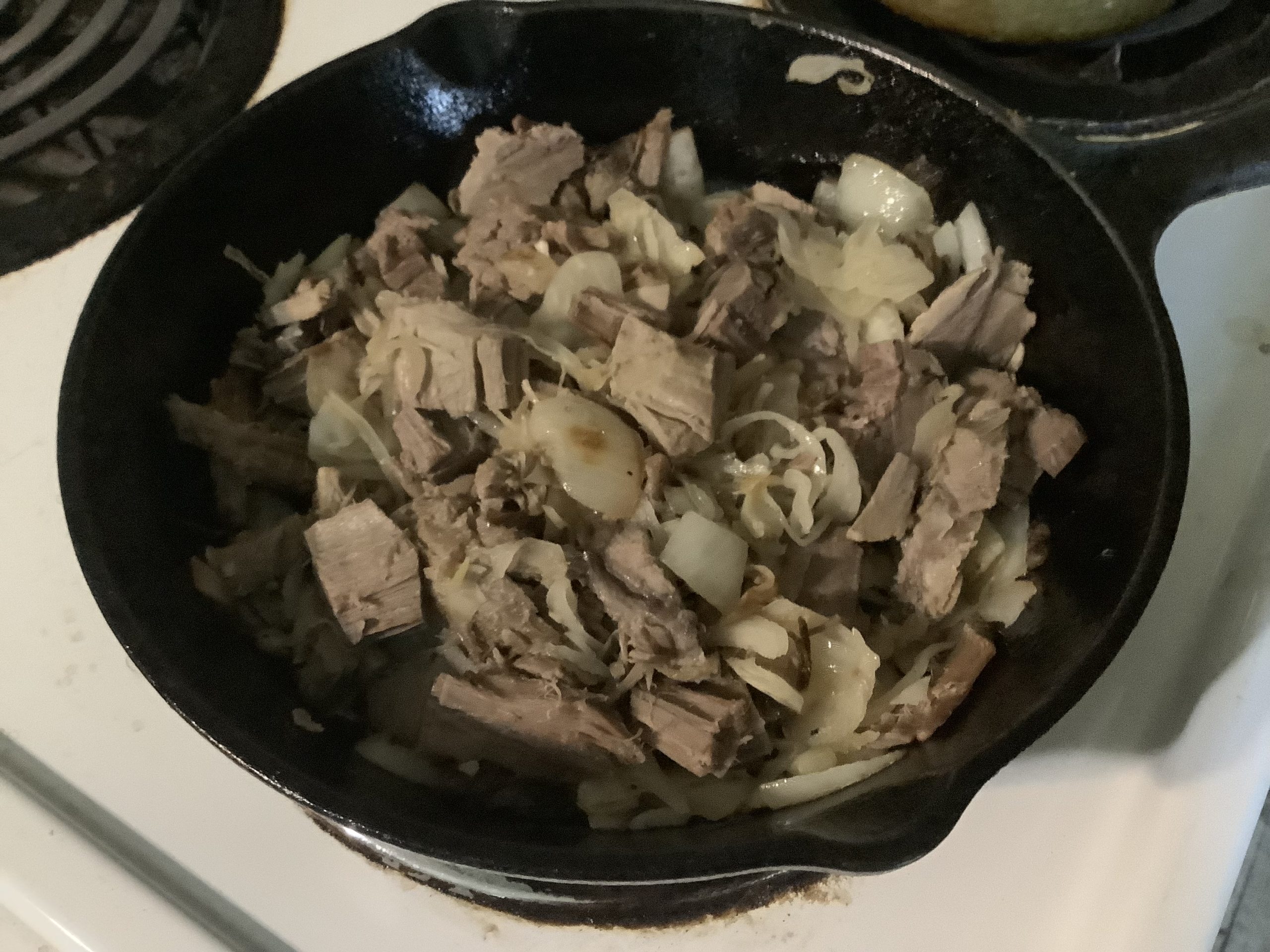
Leftover roast lamb, cut into pieces and fried with yesterday’s baked potatoes and a generous helping of sauerkraut browned in the same pan.

One of my favourite comfort meals after a hard day’s work.

I had hoped to take a picture for today’s journal, but somewhere during the day my iPad had disappeared.

Convinced I’d left it in the truck, I made the ten-minute walk through the woods to the neighbours’ place by the barn.

We searched the truck.

Nothing.

I checked the barn.

Lucy still hadn’t kidded.

The sheep were content.

The goats were content.

Still no iPad.

Rather than climb back over the hill through the woods, I chose the longer but easier route home along Bell Road and River Road.

Sometimes, when you’re tired, the easier path isn’t the shortest one.

Back at home I searched once more.

Then I remembered showing the neighbours one of the broody hens and her little family earlier in the day.

There, sitting quietly on top of the little broody house…

…was my iPad.

Exactly where I’d left it.

Some mysteries solve themselves.

As dusk settled over Briden Farm, I tucked the broodies and their chicks safely into their houses, closed up the chicken coop, and made one last round of the farm.

Everything was quiet.

Everything was settled.

Only this morning did I realize I’d forgotten something else.

For the first time since beginning these daily journals…

I forgot to publish Today at Briden Farm on the day it happened.

After a day of moving mountains of hay, mixing more than 1,300 pounds of feed, searching for a missing iPad, and putting a farm to bed…

I suppose that’s forgivable.

After all…

Sometimes life on a farm writes its own schedule.

And sometimes…

the journal simply has to wait until morning.

Today at Briden Farm: Preparing for Tomorrow

No Comments
Picture of Roast and Baked Potatoes

Thursday, July 23, 2026

The day began quietly.

By nine o’clock I’d already been up for a couple of hours, and the first round of chores was behind me.

The chicks had been fed and watered.

The broody hens and their little ones had all been looked after.

The rest of the poultry around the farmhouse had received breakfast as well.

Of course, I’d had mine too.

With everyone fed and the breakfast dishes washed, it was nice to sit for a few moments before the day really got underway.

There were still plenty of chores waiting.

The pigs, Maple and Brooke, and the roosters out in the chicken tractor would all have to wait until later.

A friend had offered me a ride into Digby to do a few errands and pick up some groceries. Since it was the first time we’d travelled together like that, I found myself getting a little antsy. Rather than pacing around the house waiting, I messaged to say I’d probably be down by the post office in Bear River when they arrived.

Sure enough, that’s exactly where I was.

And this time…

The mailbox finally held what I’d been hoping to find the other day.

From there it was off to Digby.

A little banking.

A few errands.

And a quick stop for groceries.

It’s amazing what groceries cost these days.

Eleven items.

Nearly seventy-five dollars.

Nothing extravagant.

Potatoes.

Bread.

Egg noodles.

Paper towels.

Vinegar.

Peanut butter.

Honey.

The everyday basics that somehow seem to add up faster than ever.

Back at the farmhouse, I made myself a simple egg sandwich for lunch before heading over to the barn.

The animals were fed and checked over, but before milking Patsy there was another important job waiting.

Tomorrow the hay arrives.

The large round bales—about 48 inches by 52 inches and weighing somewhere around 700 pounds each—are due tomorrow, so I spent part of the afternoon cleaning out the carport area of the barn and laying down pallets where I hope they’ll eventually rest.

The challenge isn’t the hay.

It’s unloading it.

I’ve hired someone to bring a tractor to unload the bales from the delivery truck. My hope was that the tractor could simply drive into the barn and place them directly onto the pallets.

Unfortunately, the barn entrance is only about seven feet high.

There’s a good chance the tractor won’t fit.

If that’s the case…

We’ll figure something else out.

I’ve been learning there’s very little point in worrying about problems that haven’t happened yet.

Sometimes the best place for tomorrow’s worries…

…is on a shelf until tomorrow arrives.

While cleaning out the carport, I disturbed a small nest of stinging insects hidden near the ground.

I took one sting on the shoulder almost immediately and perhaps another on my hand.

Fortunately, neither amounted to much.

Over the years I’ve developed my own way of responding when I unexpectedly find myself in that situation.

As soon as I realize what’s happened, I deliberately slow my breathing, consciously relax, try to lower my pulse, and enter what I can only describe as a meditative state. As I slowly back away, I quietly repeat the same little mantra to myself.

“Slow… relax… calm… slow… relax… calm…”

For me, the goal is to avoid that rush of adrenaline.

Without the adrenaline, I stay calm. My movements remain slow and deliberate, and I’ve noticed the insects seem to lose interest much more quickly. As I continue backing away, fewer and fewer follow until eventually they simply return to their nest.

Whether it’s the lack of adrenaline, my slower movements, or a combination of both, I can’t honestly say.

I only know it’s worked well for me over the years.

Now, before anyone gets any ideas…

Don’t try this at home.

I’m certainly not recommending it as advice.

I’m simply sharing what I’ve found works for me.

With the barn cleaned up as much as possible, Patsy took her usual place on the milking stand.

She’s always the last stop before heading home.

Back at the farmhouse, the focus shifted from the barn to the kitchen.

Earlier in the morning I’d put a roast into the slow cooker.

The meat came from Darius, our three- or four-year-old ram. Around Briden Farm we still tend to call it lamb, even though technically it isn’t. Today’s cut came from the neck and upper rib area, just ahead of the section that would become a crown rack of lamb.

There isn’t a great deal of meat on that cut, but slow cooking works wonders.

It will make tonight’s supper, tomorrow’s lunch in the form of a sandwich, and whatever remains will probably find its way onto tomorrow night’s supper plate.

Very little goes to waste around here.

I also put half a dozen potatoes into the oven.

No, I wasn’t planning on eating six baked potatoes.

Just one.

The others will become fried potatoes for breakfast, tomorrow night’s supper, or another meal later in the week.

I’ve found it’s far more efficient to bake several at once than to keep turning the oven on every day.

After that, it was back outside one last time.

Maple and Brooke were fed and checked over.

The roosters out in the chicken tractor near the sumac received fresh feed and water.

The pigs were looked after as well.

With that, the day’s chores were finally complete.

Supper was waiting.

By about 7:30 this evening, for the first time all day, there was nothing that absolutely had to be done.

That doesn’t happen very often.

It left me with a little time to simply relax.

Perhaps a short nap.

Perhaps a cup of tea.

Perhaps just sitting quietly and enjoying the evening before making one final trip outside at dusk to close up the broody hens and their chicks, along with the rest of the flock safely tucked into the chicken coop for the night.

As I looked over the groceries spread across the kitchen table, I couldn’t help but smile.

There wasn’t anything fancy.

Just the everyday necessities that keep a farmhouse running.

Sometimes that’s enough.

Tomorrow the hay arrives.

And with it…

Another chapter begins.

Enjoying today’s journal?

You might also enjoy This Week at Briden Farm, my weekly look back at life, livestock, and the little adventures that make up Briden Farm.

https://brianhurlburt.substack.com 


Baked Potatoes and Roast Mutton