This Week at Briden Farm: Week Ending July 4, 2026
There are weeks on the farm that quietly pass by, and then there are weeks that remind you exactly why you chose this life.
This was one of those weeks.
It really began the Saturday before, with our Birthday BBQ and Landowner Appreciation Gathering.
The day celebrated two birthdays, but it was also our way of saying thank you to the neighbours and landowners who have trusted Briden Farm with pieces of their property. Although we own 22 acres, today Briden Farm has access to about 117 acres of grazing land because of those relationships. That’s something we never take for granted.
Like most farm gatherings, not everything went according to plan. The charcoal barbecue never got used after someone decided the gas barbecue would be enough. The baked potatoes took longer than expected, and we finally confirmed what we’d suspected for some time—our kitchen oven isn’t heating properly. The crown rack of lamb had to be finished on the barbecue.
There were a few hiccups.
But by the end of the day every bit of the pork and lamb (actually a 3-4 year old Ram) had been eaten, people were talking about how good it tasted, and before everyone left I took a moment to thank them for allowing Briden Farm to graze our livestock on their land.
Looking back now, I think that gathering set the tone for the week.
It reminded me that Briden Farm isn’t built only on fences, fields, and livestock.
It’s built on relationships.
Then came the heat.
Friday was one of the hottest days we’ve seen this summer.
Temperatures reached at least 31°C, with the humidex feeling much closer to 40.
Instead of one round of chores, the weather demanded three.
Morning.
Afternoon.
Evening.
The sheep emptied an entire water container between morning and mid-afternoon, confirming something we’ve suspected for a while. On days like that, checking water isn’t optional.
It’s essential.
The pigs spent much of the day wallowing in the wet spot in their paddock. I’ve often wondered if it’s an old spring that’s been covered over. Maybe someday they’ll uncover it for us.
Yesterday I left a bucket of water sitting in the shade near their pasture. It meant one less trip pushing a wheelbarrow full of water through the afternoon heat. Sometimes the best chore you do today is the one that makes tomorrow easier.
Earlier that morning I spent three hours trimming fence lines and moving the sheep to a fresh paddock.
The move itself reminded me how much the lambs have grown.
Just a few weeks ago they stood watching, unsure of what was happening.
This week they simply followed.
I opened the corner of the electric netting, hung the post in a small tree, and every ewe and every lamb calmly followed me into their new salad bar.
Watching those lambs move confidently with the flock told me something.
They’re not just following their mothers anymore.
They’re learning the Briden Farm routine.
That will become especially important over the next few days as we prepare to move them into the barn for Monday’s shearing and hoof trimming.
We usually shear in April, but finding shearers has become increasingly difficult. Sadly, we learned this year how important timely shearing can be when we lost our Babydoll ewe, Baby, to fly strike.
Some lessons are hard.
Lucy is still keeping us guessing.
She’s still waiting to freshen.
Every morning and every evening I check on her, making sure she has clean water, grain, and a comfortable place to escape the heat.
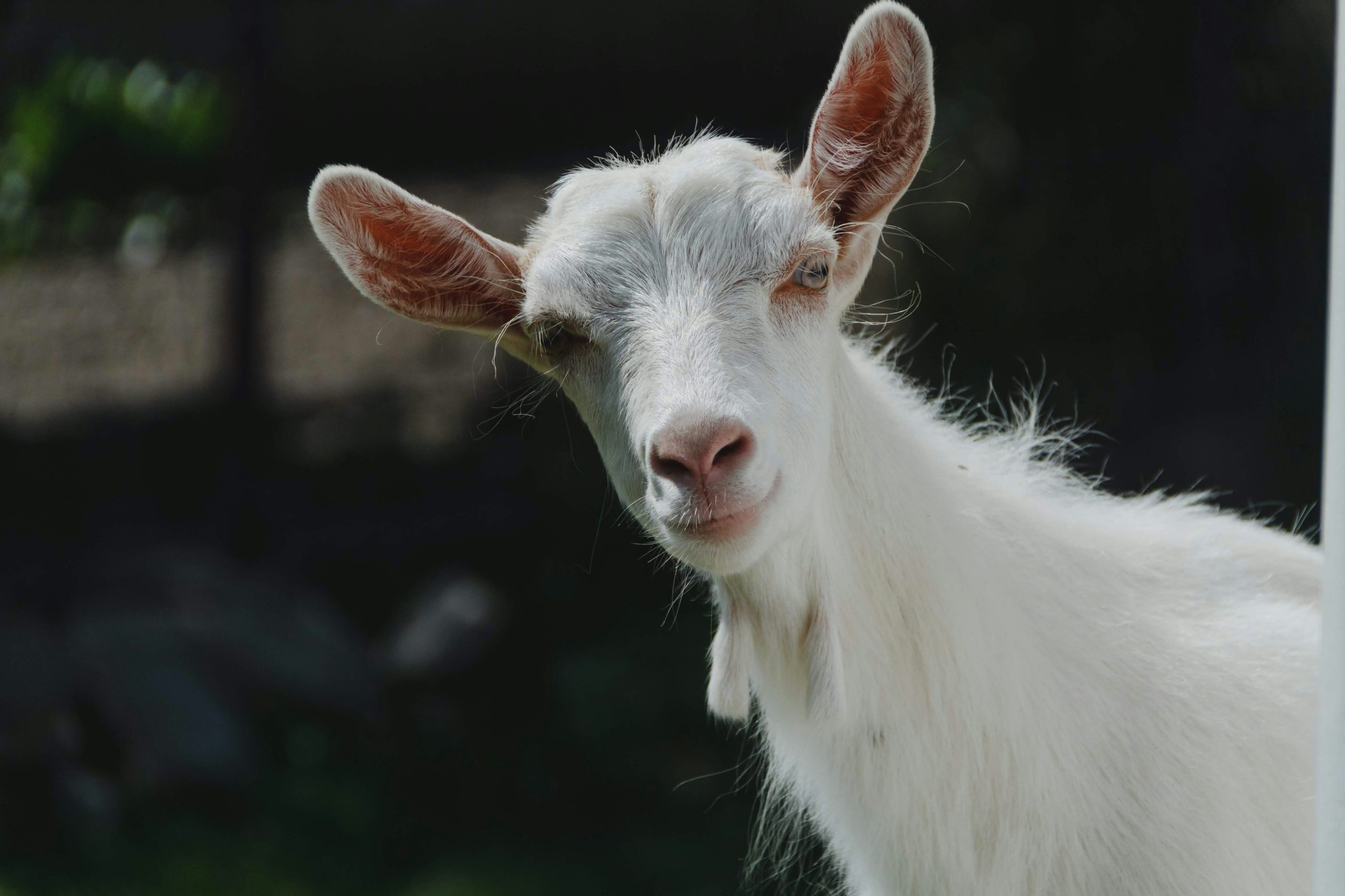
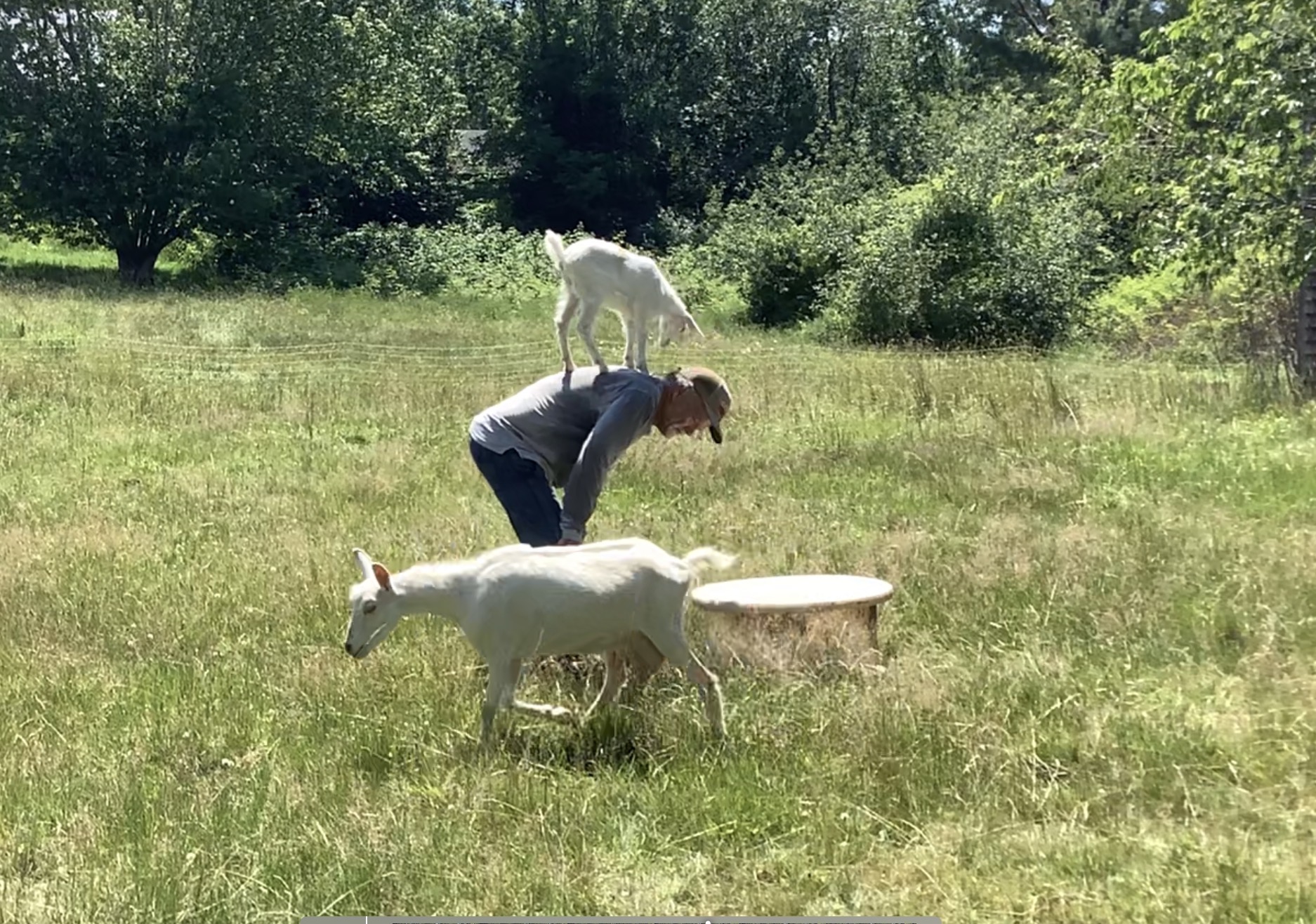
The Saanen goats continue their daily routine, spending part of the day outside while Lucy stays separated to avoid unnecessary jostling before she freshens.
Sometimes the calendar says one thing.
The goats have other ideas.
One of the highlights of the week was Patsy.
Milking her is beginning to feel less like a wrestling match and more like a conversation.
The first time she screamed, kicked, and protested every minute.
Tonight she calmly kept her head in the feed bucket while I milked her.
We collected over a litre, but more importantly, she trusted me.
Near the end I stopped, left the rest for Rose, and didn’t ask for more than Patsy was ready to give.
Every milking shows improvement.
I think we’re both being trained.
The dogs had a big week too.
The DOGOITM GPS virtual fence project reached an important milestone.
Both collars were independently programmed and tested.
Walking along Parker Road and later driving west on River Road with the collars sitting on the truck seat, both collars beeped and vibrated at almost exactly the same location.
That doesn’t mean the testing is finished.
It does mean the results are becoming repeatable.
Now the next step is to fine-tune the boundary before Roscoe and River begin their training.
Speaking of dogs…
Blue reminded me how hard it is to say goodbye to a good one.
Before she leaves for her new home, I sat with her while she ate and told her how proud I am of how far she’s come since returning to us in March.
I gave her a hug.
She quietly lay down beside me.
She’s never done that before.
I think she was saying,
“Okay Dad, if you think it’ll be good for me, and it’ll help you, I’ll go.”
Bear, meanwhile, is growing up fast.
He’s learned his name—or maybe I’ve finally learned it.
He’s coming when called, following us around the farm, and this week he made one of his first trips to Mary’s pond.
Roscoe swam.
River waded.
Bear watched.
Eventually curiosity won, and he got his feet wet.
Sometimes the best teacher isn’t me.
Sometimes it’s another dog.
This week also reminded me that good neighbours are one of Briden Farm’s greatest blessings.
While I was tending to the goats, Albert stopped to chat.
He asked when we were planning to bring the pigs over. We’d talked about it in passing a year or so ago.
Then he told me that if I ever wanted to use more of their land, all I had to do was ask.
That meant a great deal to me.
It wasn’t simply an offer of more pasture.
It was an expression of trust.
Briden Farm has grown because people have trusted us to care for both their land and our livestock.
That’s something we never take for granted.
Another change this week has been in how we’re managing the farm itself.
We’ve started buying livestock feed a month at a time.
The feed store isn’t far away, but every trip costs fuel, wear and tear on the truck, and usually a few things that weren’t on the shopping list.
Planning ahead means fewer trips, fewer surprises, and one less thing to worry about.
The same thinking led me to buying extra dog food while it was on sale.
We’ll use it.
It’s dry.
It stores well.
So why not buy it when it’s cheaper?
It’s all part of making Briden Farm a little more manageable.
We’ve been doing this for nearly six years now.
We’ve learned a lot.
Now we’re refining what we’ve learned.
The goal isn’t simply to make farming easier.
It’s to build a system that someone else can understand.
Someday we may need help.
Someday we may want a few days away.
And someday, perhaps, another small farm will adapt what we’ve learned here to fit their own operation.
That’s one of the reasons we’re building the Briden Farm Operations Handbook.
Not just to remember.
But to pass it on.
Looking ahead, next week promises to be another busy one.
The sheep will move into the barn ahead of Monday’s shearing.
The goats will have their hooves trimmed.
The GPS collars will continue their testing.
Lucy will, hopefully, finally freshen.
And life at Briden Farm will carry on, one chore at a time.
Some weeks are exhausting.
Some weeks are heartbreaking.
Some weeks are deeply satisfying.
Most weeks are all three.
That’s farming.
And when the chores are finally done, the boots are by the door, the animals are settled for the night, and the sun is slipping below the trees, there’s still something special about sitting down with a bowl of orange pineapple ice cream and a cup of old-fashioned #BridenFarm Tea.
Until next week,
Brian Hurlburt
Briden Farm, Bear River, Nova Scotia
Dogs Fun at the Farm Goat Milk Products Goats Lambs Life at Briden Farm Saanen Goats Sheep Woodland Pastured Pork