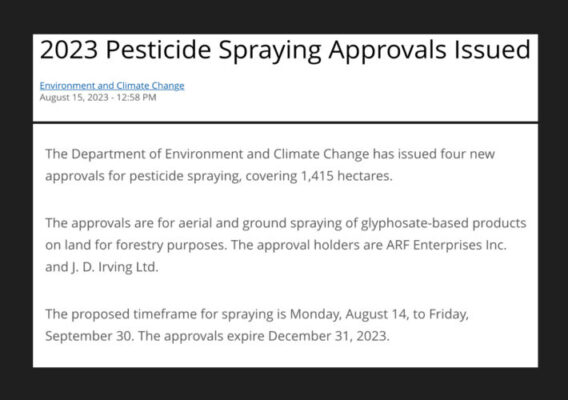
Over the past year or so we’ve heard about Glyphosate being sprayed in the local area. Glyphosate is the ingredient in Roundup and it’s not only been linked to a number of health concerns, it’s also been seen to have a number of negative environmental impacts! So, there have been local concerns and protests and even…
Anti-glyphosate camps pop up in Nova Scotia forests!
So, when I was recently contacted by Sebastian Aristizabal, International Outreach Specialist for DrugWatch.com about this I welcomed Sebastian to submit the following information…
The Negative Effects of Glyphosate and Sustainable Alternatives to Roundup
In recent years, there has been growing concern over the use of glyphosate-based herbicides, such as Roundup, and their impact on both the environment and human health. Glyphosate is one of the most widely used herbicides globally, but mounting evidence suggests that it may have negative effects. In this blog, we will explore the potential harms of glyphosate and introduce eco-friendly alternatives that promote a safer and more sustainable approach to weed management.
The Glyphosate Controversy
Glyphosate has been the subject of controversy due to its association with several negative effects:
1. Environmental Impact:
Glyphosate is known to harm non-target plants, insects, and aquatic life. It can disrupt ecosystems and affect biodiversity.
2. Human Health Concerns:
Studies have raised concerns about the potential health risks of glyphosate exposure, including links to cancer, reproductive problems, and neurological disorders.
3. Glyphosate Residues:
Residues of glyphosate have been found in food and drinking water, potentially exposing humans to this chemical even if they don’t use it directly.
Sustainable Alternatives to Roundup
Thankfully, there are alternative methods and products available that can help manage weeds without the negative effects associated with glyphosate:
1. Manual Weeding:
Good old-fashioned hand weeding remains an effective and environmentally friendly method. It might require more labor, but it eliminates the need for harmful chemicals.
2. Mulching:
Applying organic mulch like wood chips, straw, or leaves to your garden can help smother weeds and retain soil moisture. This method is not only effective but also improves soil health.
3. Biological Control:
Introduce natural predators or competitors for weeds, such as beneficial insects or ground-covering plants. This can help keep weed populations in check without the need for herbicides.
4. Organic Herbicides:
Explore organic herbicides that use natural ingredients like acetic acid or citric acid to control weeds. While they may still require caution, they are generally safer than glyphosate-based products.
5. Sustainable Landscaping Practices:
Redesign your landscape to minimize weed growth by planting ground covers, using proper spacing, and reducing bare soil exposure.
Conclusion
The negative effects associated with glyphosate and Roundup cannot be ignored. As responsible stewards of our environment and our health, it’s crucial to explore and adopt sustainable alternatives for weed management. By doing so, we can reduce our reliance on harmful chemicals, protect biodiversity, and create healthier living spaces for ourselves and future generations.
-30-
As for me, I think my first environmental campaign was when I was in my late Teens and the Rio Algol Tin Mine in East Kemptville, Yarmouth County, Nova Scotia overflowed it’s tailings pond and polluted the Tusket River with discharge. I began a protest, escorting ATV reporter Bill Jessome around the community of East Kemptville, and the Tusket River. It was also at that time that Mil Nickerson started TREPA, the Tusket River Environmental Protection Association. Of which I was made an Honorary Lifetime Member when I agreed to combine my efforts with theirs.
Today, the idea of an herbicide that’s been linked to so many health and environmental concerns, and banned in many areas, being legal in Canada is ludicrous. Especially when Canada is the only G7 Country to make the sale of Raw Milk totally illegal, yet seemingly has no problem with the Toxic Effects of Glyphosate on the Nervous System!