Tag: Canada

Today at Briden Farm: Some days on a farm test your muscles.
No Comments

Friday, July 24, 2026

Some days on a farm test your muscles.

Others test your wallet.

Today managed to do both.

The morning began with sunshine and the promise of an important delivery—this year’s hay. Along with picking up this month’s livestock feed, it was one of the most expensive days of the year here at Briden Farm. It’s enough to make any small farmer stop and wonder whether all of this is really worth it.

Then I thought back to yesterday’s grocery trip.

Eleven items.

Seventy-five dollars.

Not much, really.

The livestock feed costs money too, but the animals give something back. The goats provide milk that becomes cheese, and sometimes butter. The sheep and goats provide meat. The chickens provide eggs, and the pigs make good use of things that might otherwise be wasted.

Looking at it that way, the farm isn’t just an expense.

It’s also a producer.

The hay truck arrived later in the morning, followed by the tractor hired to unload the round bales. Everything went smoothly, except for one thing I’d suspected all along.

The tractor was simply too large to get the hay where I ultimately wanted it.

Once the truck and tractor had gone, and everyone had been paid, I stood looking at several thousand pounds of hay that still needed moving.

Over the past few years I’ve learned that farming isn’t always about brute strength.

It’s about patience.

It’s about leverage.

Sometimes it’s about moving a mountain… one inch at a time.

These larger round bales, roughly 48 by 52 inches and weighing somewhere around 700 pounds each, weren’t going to move themselves.

I laid down pallets where I wanted them.

Then I began.

A little push.

A little lean.

Shift my hands.

Find the balance point.

Let gravity become my partner instead of my enemy.

One by one, the bales tipped upright onto fresh pallets.

The four bales that had been sitting completely outside the entrance to the carport gradually worked their way under cover.

Then I turned my attention to the two large bales and one slightly smaller bale beside the barn.

Using a couple of boards as ramps, careful positioning, and plenty of patience, I slowly rolled each bale onto waiting pallets.

The smaller bale decided it had ideas of its own and rolled farther than I intended, but after a little persuasion—and quite a bit of leverage—it, too, ended up where I wanted it.

By the time I finished, I knew something important.

I could move these bales.

Not quickly.

Not easily.

But they could be moved.

There’s still room farther into the carport for another four to six bales once I gather more pallets and devise another way of flipping and rolling them deeper inside.

That’s a puzzle for another day.

Lucy kept us guessing once again. She seemed quieter than usual and I briefly wondered if kidding was finally about to begin. She happily ate her grain before I left, showing no obvious signs that the time had arrived, but Mary kindly agreed to keep an eye on her through the afternoon.

The day still had one more surprise in store.

As the afternoon unfolded, something else made itself available.

Time.

And just as importantly, Pete and Maxine arrived with their half-ton truck.

Instead of putting off this month’s feed until another day, we decided to go.

Twenty-five bags.

Twenty-five kilograms each.

More than 1,300 pounds of livestock feed.

Back at Briden Farm, every bag had to be unloaded.

Then about half of that feed needed to be mixed by hand before it could be stored.

Bag after bag.

Shovel after shovel.

Different grains blended together into a balanced ration.

The remaining bags were loaded into the wheelbarrow and hauled to the house.

One trip.

Then another.

Then another.

People often picture a farm with a large bank barn or a spacious feed room.

Briden Farm doesn’t have that luxury.

One of the challenges of a small homestead is simply finding somewhere dry and rodent-proof to store feed.

So, for now…

The feed comes into the house.

Not exactly what most people imagine when they think of country living.

But that’s the reality of making do with what you have.

Every farm has its challenges.

Every farm finds its own solutions.

By the time supper rolled around, I was feeling every hay bale, every feed bag, and every wheelbarrow load.

Supper was simple.

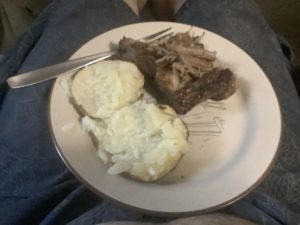
Leftover roast lamb, cut into pieces and fried with yesterday’s baked potatoes and a generous helping of sauerkraut browned in the same pan.

One of my favourite comfort meals after a hard day’s work.

I had hoped to take a picture for today’s journal, but somewhere during the day my iPad had disappeared.

Convinced I’d left it in the truck, I made the ten-minute walk through the woods to the neighbours’ place by the barn.

We searched the truck.

Nothing.

I checked the barn.

Lucy still hadn’t kidded.

The sheep were content.

The goats were content.

Still no iPad.

Rather than climb back over the hill through the woods, I chose the longer but easier route home along Bell Road and River Road.

Sometimes, when you’re tired, the easier path isn’t the shortest one.

Back at home I searched once more.

Then I remembered showing the neighbours one of the broody hens and her little family earlier in the day.

There, sitting quietly on top of the little broody house…

…was my iPad.

Exactly where I’d left it.

Some mysteries solve themselves.

As dusk settled over Briden Farm, I tucked the broodies and their chicks safely into their houses, closed up the chicken coop, and made one last round of the farm.

Everything was quiet.

Everything was settled.

Only this morning did I realize I’d forgotten something else.

For the first time since beginning these daily journals…

I forgot to publish Today at Briden Farm on the day it happened.

After a day of moving mountains of hay, mixing more than 1,300 pounds of feed, searching for a missing iPad, and putting a farm to bed…

I suppose that’s forgivable.

After all…

Sometimes life on a farm writes its own schedule.

And sometimes…

the journal simply has to wait until morning.
Today at Briden Farm: Preparing for Tomorrow

No Comments
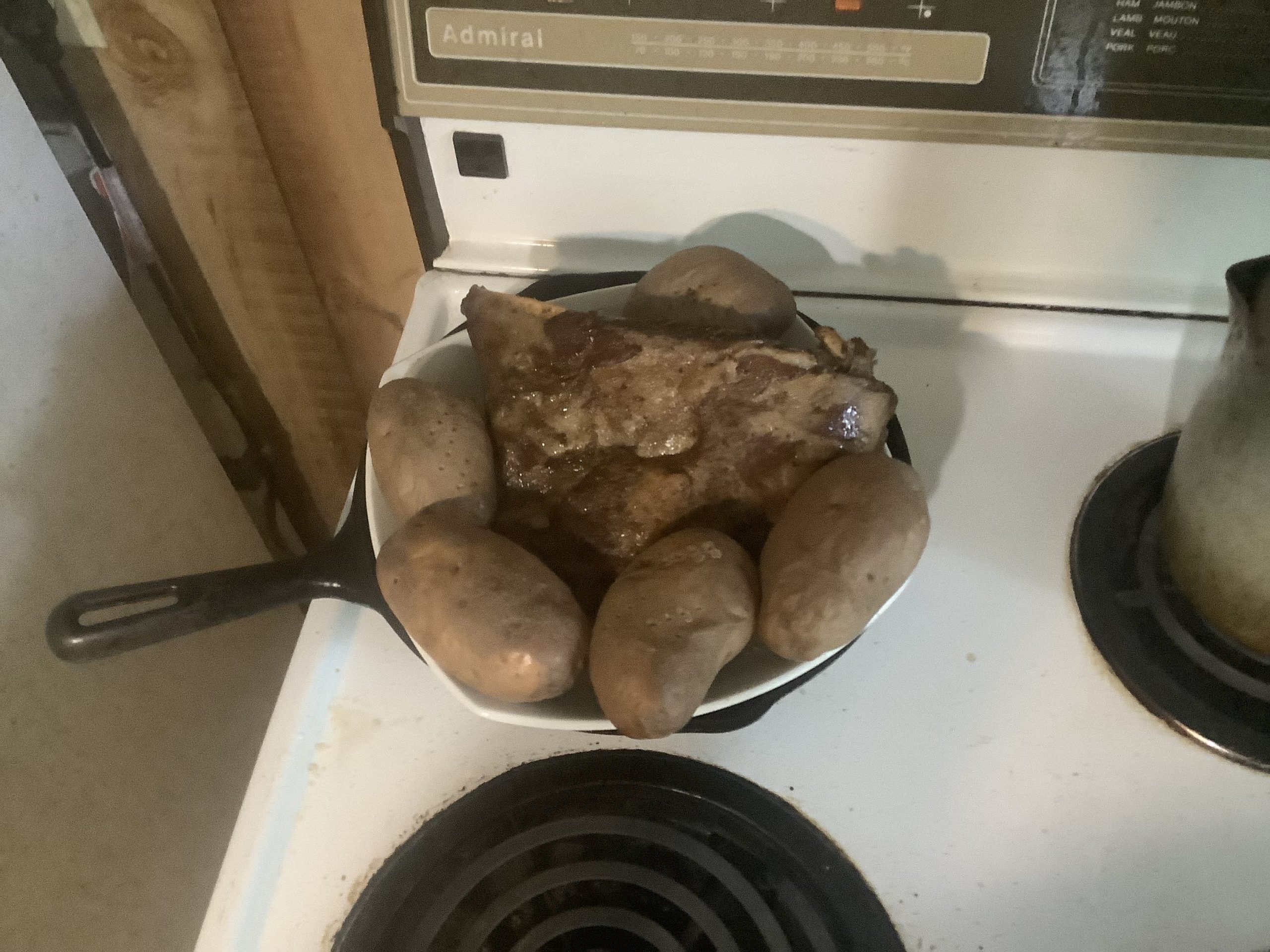
Picture of Roast and Baked Potatoes

Thursday, July 23, 2026

The day began quietly.

By nine o’clock I’d already been up for a couple of hours, and the first round of chores was behind me.

The chicks had been fed and watered.

The broody hens and their little ones had all been looked after.

The rest of the poultry around the farmhouse had received breakfast as well.

Of course, I’d had mine too.

With everyone fed and the breakfast dishes washed, it was nice to sit for a few moments before the day really got underway.

There were still plenty of chores waiting.

The pigs, Maple and Brooke, and the roosters out in the chicken tractor would all have to wait until later.

A friend had offered me a ride into Digby to do a few errands and pick up some groceries. Since it was the first time we’d travelled together like that, I found myself getting a little antsy. Rather than pacing around the house waiting, I messaged to say I’d probably be down by the post office in Bear River when they arrived.

Sure enough, that’s exactly where I was.

And this time…

The mailbox finally held what I’d been hoping to find the other day.

From there it was off to Digby.

A little banking.

A few errands.

And a quick stop for groceries.

It’s amazing what groceries cost these days.

Eleven items.

Nearly seventy-five dollars.

Nothing extravagant.

Potatoes.

Bread.

Egg noodles.

Paper towels.

Vinegar.

Peanut butter.

Honey.

The everyday basics that somehow seem to add up faster than ever.

Back at the farmhouse, I made myself a simple egg sandwich for lunch before heading over to the barn.

The animals were fed and checked over, but before milking Patsy there was another important job waiting.

Tomorrow the hay arrives.

The large round bales—about 48 inches by 52 inches and weighing somewhere around 700 pounds each—are due tomorrow, so I spent part of the afternoon cleaning out the carport area of the barn and laying down pallets where I hope they’ll eventually rest.

The challenge isn’t the hay.

It’s unloading it.

I’ve hired someone to bring a tractor to unload the bales from the delivery truck. My hope was that the tractor could simply drive into the barn and place them directly onto the pallets.

Unfortunately, the barn entrance is only about seven feet high.

There’s a good chance the tractor won’t fit.

If that’s the case…

We’ll figure something else out.

I’ve been learning there’s very little point in worrying about problems that haven’t happened yet.

Sometimes the best place for tomorrow’s worries…

…is on a shelf until tomorrow arrives.

While cleaning out the carport, I disturbed a small nest of stinging insects hidden near the ground.

I took one sting on the shoulder almost immediately and perhaps another on my hand.

Fortunately, neither amounted to much.

Over the years I’ve developed my own way of responding when I unexpectedly find myself in that situation.

As soon as I realize what’s happened, I deliberately slow my breathing, consciously relax, try to lower my pulse, and enter what I can only describe as a meditative state. As I slowly back away, I quietly repeat the same little mantra to myself.

“Slow… relax… calm… slow… relax… calm…”

For me, the goal is to avoid that rush of adrenaline.

Without the adrenaline, I stay calm. My movements remain slow and deliberate, and I’ve noticed the insects seem to lose interest much more quickly. As I continue backing away, fewer and fewer follow until eventually they simply return to their nest.

Whether it’s the lack of adrenaline, my slower movements, or a combination of both, I can’t honestly say.

I only know it’s worked well for me over the years.

Now, before anyone gets any ideas…

Don’t try this at home.

I’m certainly not recommending it as advice.

I’m simply sharing what I’ve found works for me.

With the barn cleaned up as much as possible, Patsy took her usual place on the milking stand.

She’s always the last stop before heading home.

Back at the farmhouse, the focus shifted from the barn to the kitchen.

Earlier in the morning I’d put a roast into the slow cooker.

The meat came from Darius, our three- or four-year-old ram. Around Briden Farm we still tend to call it lamb, even though technically it isn’t. Today’s cut came from the neck and upper rib area, just ahead of the section that would become a crown rack of lamb.

There isn’t a great deal of meat on that cut, but slow cooking works wonders.

It will make tonight’s supper, tomorrow’s lunch in the form of a sandwich, and whatever remains will probably find its way onto tomorrow night’s supper plate.

Very little goes to waste around here.

I also put half a dozen potatoes into the oven.

No, I wasn’t planning on eating six baked potatoes.

Just one.

The others will become fried potatoes for breakfast, tomorrow night’s supper, or another meal later in the week.

I’ve found it’s far more efficient to bake several at once than to keep turning the oven on every day.

After that, it was back outside one last time.

Maple and Brooke were fed and checked over.

The roosters out in the chicken tractor near the sumac received fresh feed and water.

The pigs were looked after as well.

With that, the day’s chores were finally complete.

Supper was waiting.

By about 7:30 this evening, for the first time all day, there was nothing that absolutely had to be done.

That doesn’t happen very often.

It left me with a little time to simply relax.

Perhaps a short nap.

Perhaps a cup of tea.

Perhaps just sitting quietly and enjoying the evening before making one final trip outside at dusk to close up the broody hens and their chicks, along with the rest of the flock safely tucked into the chicken coop for the night.

As I looked over the groceries spread across the kitchen table, I couldn’t help but smile.

There wasn’t anything fancy.

Just the everyday necessities that keep a farmhouse running.

Sometimes that’s enough.

Tomorrow the hay arrives.

And with it…

Another chapter begins.

Enjoying today’s journal?

You might also enjoy This Week at Briden Farm, my weekly look back at life, livestock, and the little adventures that make up Briden Farm.

https://brianhurlburt.substack.com 


Baked Potatoes and Roast Mutton

This Week at Briden Farm: Week Ending July 4, 2026

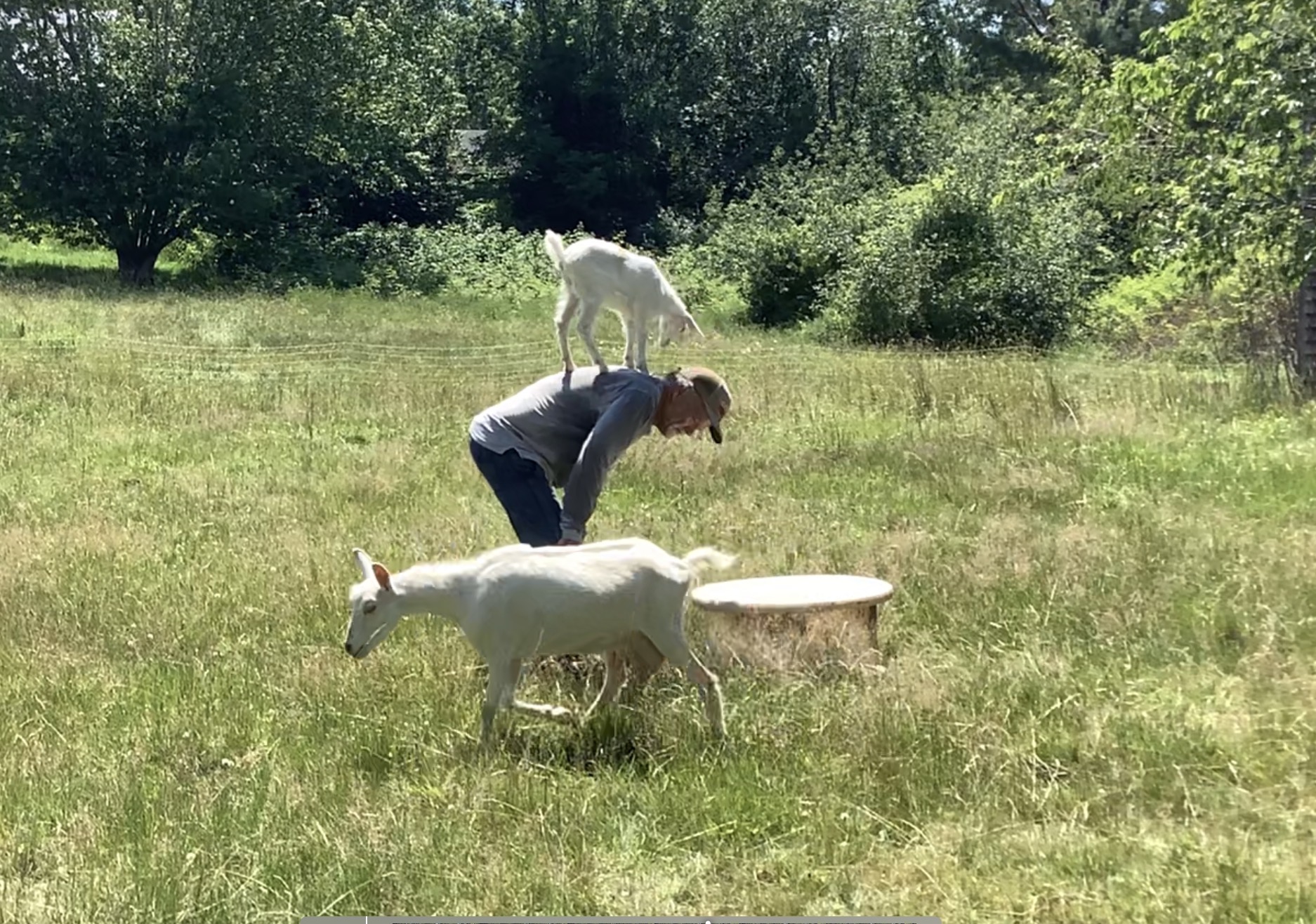
Circus Tricks with Briden Farm Goats

There are weeks on the farm that quietly pass by, and then there are weeks that remind you exactly why you chose this life.

This was one of those weeks.

It really began the Saturday before, with our Birthday BBQ and Landowner Appreciation Gathering.

The day celebrated two birthdays, but it was also our way of saying thank you to the neighbours and landowners who have trusted Briden Farm with pieces of their property. Although we own 22 acres, today Briden Farm has access to about 117 acres of grazing land because of those relationships. That’s something we never take for granted.

Like most farm gatherings, not everything went according to plan. The charcoal barbecue never got used after someone decided the gas barbecue would be enough. The baked potatoes took longer than expected, and we finally confirmed what we’d suspected for some time—our kitchen oven isn’t heating properly. The crown rack of lamb had to be finished on the barbecue.

There were a few hiccups.

But by the end of the day every bit of the pork and lamb (actually a 3-4 year old Ram) had been eaten, people were talking about how good it tasted, and before everyone left I took a moment to thank them for allowing Briden Farm to graze our livestock on their land.

Looking back now, I think that gathering set the tone for the week.

It reminded me that Briden Farm isn’t built only on fences, fields, and livestock.

It’s built on relationships.

Then came the heat.

Friday was one of the hottest days we’ve seen this summer.

Temperatures reached at least 31°C, with the humidex feeling much closer to 40.

Instead of one round of chores, the weather demanded three.

Morning.

Afternoon.

Evening.

The sheep emptied an entire water container between morning and mid-afternoon, confirming something we’ve suspected for a while. On days like that, checking water isn’t optional.

It’s essential.

The pigs spent much of the day wallowing in the wet spot in their paddock. I’ve often wondered if it’s an old spring that’s been covered over. Maybe someday they’ll uncover it for us.

Yesterday I left a bucket of water sitting in the shade near their pasture. It meant one less trip pushing a wheelbarrow full of water through the afternoon heat. Sometimes the best chore you do today is the one that makes tomorrow easier.

Earlier that morning I spent three hours trimming fence lines and moving the sheep to a fresh paddock.

The move itself reminded me how much the lambs have grown.

Just a few weeks ago they stood watching, unsure of what was happening.

This week they simply followed.

I opened the corner of the electric netting, hung the post in a small tree, and every ewe and every lamb calmly followed me into their new salad bar.

Watching those lambs move confidently with the flock told me something.

They’re not just following their mothers anymore.

They’re learning the Briden Farm routine.

That will become especially important over the next few days as we prepare to move them into the barn for Monday’s shearing and hoof trimming.

We usually shear in April, but finding shearers has become increasingly difficult. Sadly, we learned this year how important timely shearing can be when we lost our Babydoll ewe, Baby, to fly strike.

Some lessons are hard.

Lucy is still keeping us guessing.

She’s still waiting to freshen.

Every morning and every evening I check on her, making sure she has clean water, grain, and a comfortable place to escape the heat.

The Saanen goats continue their daily routine, spending part of the day outside while Lucy stays separated to avoid unnecessary jostling before she freshens.

Sometimes the calendar says one thing.

The goats have other ideas.

One of the highlights of the week was Patsy.

Milking her is beginning to feel less like a wrestling match and more like a conversation.

The first time she screamed, kicked, and protested every minute.

Tonight she calmly kept her head in the feed bucket while I milked her.

We collected over a litre, but more importantly, she trusted me.

Near the end I stopped, left the rest for Rose, and didn’t ask for more than Patsy was ready to give.

Every milking shows improvement.

I think we’re both being trained.

The dogs had a big week too.

The DOGOITM GPS virtual fence project reached an important milestone.

Both collars were independently programmed and tested.

Walking along Parker Road and later driving west on River Road with the collars sitting on the truck seat, both collars beeped and vibrated at almost exactly the same location.

That doesn’t mean the testing is finished.

It does mean the results are becoming repeatable.

Now the next step is to fine-tune the boundary before Roscoe and River begin their training.

Speaking of dogs…

Blue reminded me how hard it is to say goodbye to a good one.

Before she leaves for her new home, I sat with her while she ate and told her how proud I am of how far she’s come since returning to us in March.

I gave her a hug.

She quietly lay down beside me.

She’s never done that before.

I think she was saying,

“Okay Dad, if you think it’ll be good for me, and it’ll help you, I’ll go.”

Bear, meanwhile, is growing up fast.

He’s learned his name—or maybe I’ve finally learned it.

He’s coming when called, following us around the farm, and this week he made one of his first trips to Mary’s pond.

Roscoe swam.

River waded.

Bear watched.

Eventually curiosity won, and he got his feet wet.

Sometimes the best teacher isn’t me.

Sometimes it’s another dog.

This week also reminded me that good neighbours are one of Briden Farm’s greatest blessings.

While I was tending to the goats, Albert stopped to chat.

He asked when we were planning to bring the pigs over. We’d talked about it in passing a year or so ago.

Then he told me that if I ever wanted to use more of their land, all I had to do was ask.

That meant a great deal to me.

It wasn’t simply an offer of more pasture.

It was an expression of trust.

Briden Farm has grown because people have trusted us to care for both their land and our livestock.

That’s something we never take for granted.

Another change this week has been in how we’re managing the farm itself.

We’ve started buying livestock feed a month at a time.

The feed store isn’t far away, but every trip costs fuel, wear and tear on the truck, and usually a few things that weren’t on the shopping list.

Planning ahead means fewer trips, fewer surprises, and one less thing to worry about.

The same thinking led me to buying extra dog food while it was on sale.

We’ll use it.

It’s dry.

It stores well.

So why not buy it when it’s cheaper?

It’s all part of making Briden Farm a little more manageable.

We’ve been doing this for nearly six years now.

We’ve learned a lot.

Now we’re refining what we’ve learned.

The goal isn’t simply to make farming easier.

It’s to build a system that someone else can understand.

Someday we may need help.

Someday we may want a few days away.

And someday, perhaps, another small farm will adapt what we’ve learned here to fit their own operation.

That’s one of the reasons we’re building the Briden Farm Operations Handbook.

Not just to remember.

But to pass it on.

Looking ahead, next week promises to be another busy one.

The sheep will move into the barn ahead of Monday’s shearing.

The goats will have their hooves trimmed.

The GPS collars will continue their testing.

Lucy will, hopefully, finally freshen.

And life at Briden Farm will carry on, one chore at a time.

Some weeks are exhausting.

Some weeks are heartbreaking.

Some weeks are deeply satisfying.

Most weeks are all three.

That’s farming.

And when the chores are finally done, the boots are by the door, the animals are settled for the night, and the sun is slipping below the trees, there’s still something special about sitting down with a bowl of orange pineapple ice cream and a cup of old-fashioned #BridenFarm Tea.

Until next week,

Brian Hurlburt
Briden Farm, Bear River, Nova Scotia

Brown Lohmann, Brown Eggs, Laying Hens

No Comments
Bovan Brown Laying Hens

These girls lay Large Brown Eggs, and are fairly reliable at about a year o,d they’re laying at about 60-70%. We’re asking $15 each, or 12 for just $120. We also have Eggs at $6/Dozen As well as Barred Plymouth Rock Roosters, Easter Egger Roosters, and Silkie Roosters. Call Brian at BridenFarm.com 📞 902-907-0770 Bovan Brown Hens