Tag: Sheep

Raising Sheep Without Antibiotics: A Practical Approach

No Comments

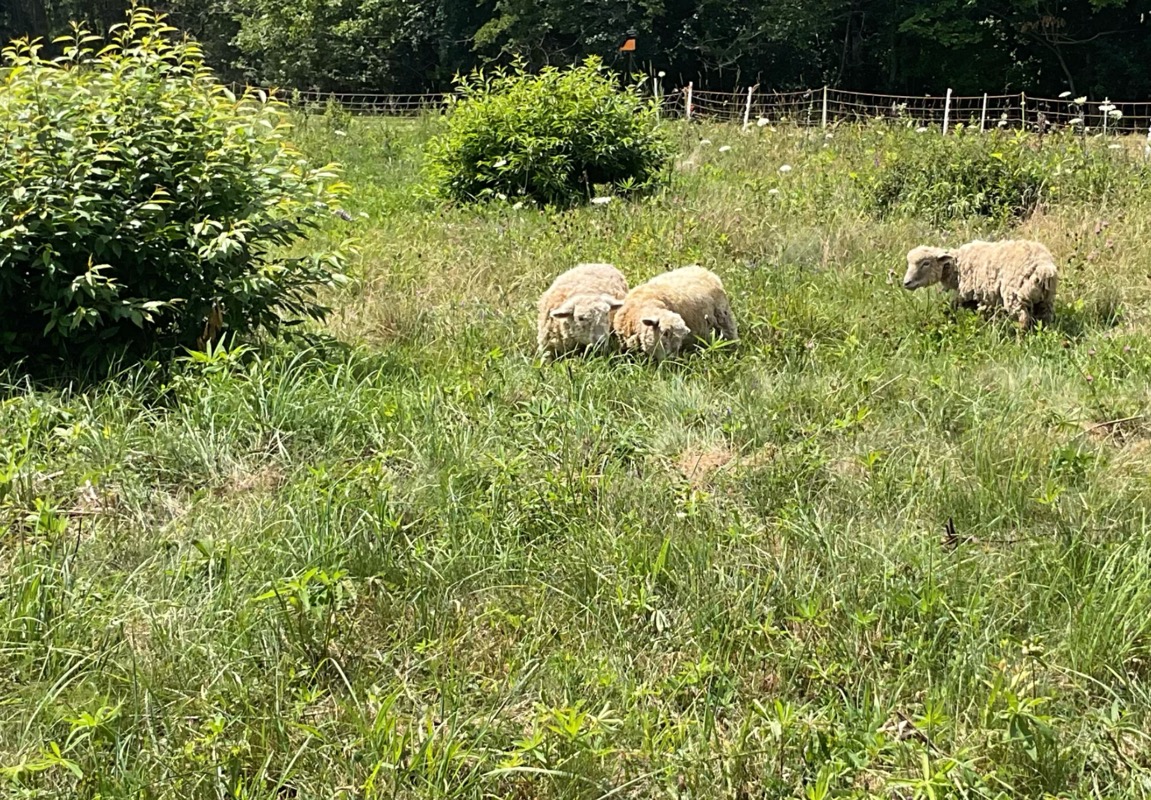
Raising sheep without chemicals and antibiotics isn’t easy, but in our experience, it’s well worth the effort. For the past two years, we’ve successfully managed our flock using rotational grazing, a method that helps control parasites naturally while keeping our sheep healthy. The key to making this work? Staying ahead of the parasite cycle.

The Power of Rotational Grazing

Sheep parasites become infective on Day 5, which means that timing is everything. To prevent infestations, we move our sheep to fresh pasture every four days—before the parasites become a problem. This is more frequent than what’s needed for pigs (every two weeks) or goats (who can stay in the same area for up to 30 days), but it’s necessary to keep our sheep parasite-free.

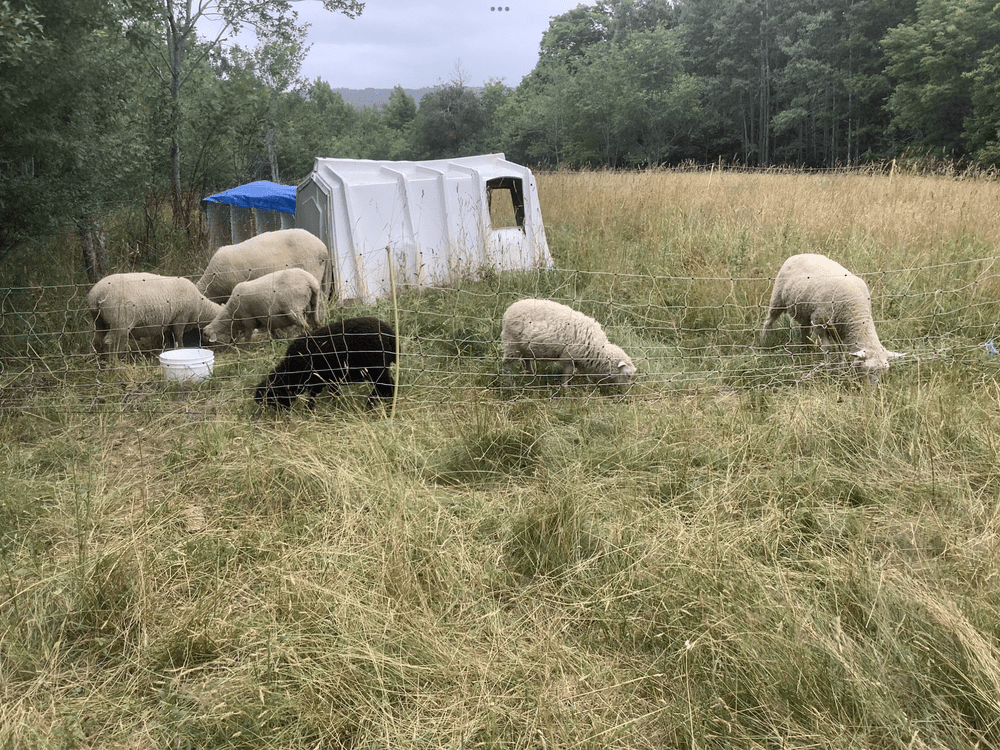
In an ideal setup, we run a small flock of 5–10 sheep within portable electric netting. Each section of fencing is either 164 feet or 328 feet long, with two fences creating a square of 82’ x 82’ (6,724 square feet). Since a full-size sheep needs about 300 square feet per day, we divide our total pasture area by four days to determine how many sheep we can sustain. For our setup, that comes out to around six sheep per pasture. We adjust as needed based on grazing pressure and pasture regrowth, ensuring the grass stays at least 3–4 inches tall—where parasites are less likely to survive.

Right-Sizing the Pasture for Healthy Grazing

It’s tempting to give sheep unlimited space, but more isn’t always better. If we enclosed a massive pasture (say, 328’ x 492’), each sheep would have over 4,000 square feet per day! That might sound great, but in reality, it’s inefficient.

Sheep, like kids in a candy store, would eat the best forage first, trample a lot of the rest, and only return to less-preferred plants when forced to. Instead, by limiting them to 300 square feet per day, we ensure they graze more evenly, reducing waste and promoting better pasture management.

The 24-Pasture Grid: Maximizing Land Use

We organize our land into a 24-pasture grid, moving sheep every four days. This means we don’t return to the same spot for at least 96 days, effectively breaking the parasite cycle. Since parasites need a host to survive, removing sheep from a pasture for 90+ days ensures that most parasites die off. This system has multiple benefits:

• Reduces fencing costs by 80%

• Encourages better grazing habits

• Prevents overgrazing and pasture degradation

• Breaks the parasite cycle before it starts

It’s not just theory—our sheep shearer, who sees plenty of flocks, has told us that our sheep are in excellent condition. We credit much of that to this rotational system.

Seasonal Adjustments and Multi-Species Grazing

In winter, we house our sheep in a barn, but during the grazing season, we integrate them into a rotation with our goats and pigs. Each species plays a role in managing the land, though they never graze the same pasture simultaneously. Rotating different animals further disrupts parasite life cycles and improves soil health.

Final Thoughts

Raising sheep without antibiotics takes planning and patience, but for us, it’s been an incredibly effective approach. If you’re considering this method, always consult with your veterinarian or livestock expert to tailor it to your specific conditions. What works for us might not be a perfect fit for everyone, but after two years of success, we’re confident that rotational grazing is one of the best ways to keep sheep healthy—naturally.

Stay tuned for more insights on how we integrate goats and pigs into our pasture management system! 


Recommended Reading from the Brian Hurlburt Bookshop: 

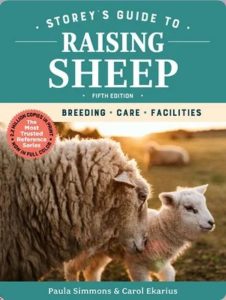
Book: Storey's Guide to Raising Sheep, 5th Edition
SHOP NOW

Metering Out The Hay

No Comments
Making Hay (1872) Winslow Homer (American, 1836-

In a Post, earlier this month, Moving an 800 lb Hay Bale by Hand, I showed the size of Round Bales we get and it also shows how Is how I roll it out. Now, in this Post, I’m going to explain how I meter out the hay so that I always feed my animals the same amount, and make my bale last a set number of days! I do this using pallets! 

Metering Out The Hay

It occurred to me that each Pallet is about a Meter (39”) wide and 48” or 4 Feet Wide, 

Which made me think of the saying, “to meter out”. Which, according to Webster’s Dictionary is to,

“to give (something) to the people who one decides should get it : to give out or distribute (something)”.

I had never made a connection between the two before. Although, at least in this case, it makes perfect sense! 

Actually, while these Pallets are about a Meter wide, I actually roll the hay the other way, From end to end, or bottom to top, which is 48 inches. 

Then, after rolling it out, I roll up the amount from one Pallet. That is the amount for each the Goats, and Sheep. 

To be honest, the first couple of Bales I did this way were more by fluke than on purpose, but it worked so well, my 800 lb Bales lasted about 3 weeks, or 21 days. Which means about 38 lbs per day. The estimated combined weight of our 7 sheep is 575 lbs. While the goats weigh in at about 450 lbs total for all five. So, a total combined weight of about 1,025 lbs. Goats require about 4% of their body weight, and sheep at least 3%. So, our 800 lb bale lasting 21 days means we’re feeding and average of about 3.7% of their combined body weight. While these are just rough numbers, I love that it works out almost to the day every time, and it seems like it’s keeping the animals in pretty good shape, we also supplement their hay with a little feed, and some treats like fruits and vegetables. We do our best to help keep everybody happy! 


Recommended Reading from the Brian Hurlburt Bookshop: 

Book: Raising Goats Naturally

Briden Farm At the Manger on Christmas Day 2024

1 Comment
Sheep

Briden Farm Sheep at the Manager on Christmas Day 2024. 

If you look close You might even see our little Goat, Patsy. 

Baaabara

Likes the limelight and she makes it difficult to get photos of …

The Other Sheep 

Here we have the “Littles” …

And one last photo…

The little sweetheart on the left is Patsy, our little doeling goat, born 18 Aug 2024..next to her is Ebony, our little ewe Black sheep, who was born outside last March, 2024. The white sheep next to Ebony is Briden our little Bottle Baby boy from late last Winter! Unfortunately I forgot to get a photos of the other goats till after I’d fed them and closed their section of the barn back up.

Hope You All had a Happy Christmas! 


Remember to Get Your Free Copy of “Trust Your Tummy” 

Yes! It’s Free! 
Merry.Christmas From HelpfulHerbal.com


Moving our Animals inside for Winter

2 Comments
Briden, Ebon, and Patsy

Here in Nova Scotia we sometimes have up to six feet of snow and temperatures as low as -25°C or 13°F. Actually colder in some Northern parts of the Province! So, that means our animals need shelter for Winter. 

To be honest, it actually saves us time, once we get them all moved in. For most of the year, from Spring to Fall, sometimes even into Winter, all our critters get moved on a pretty regular basis. Usually every week, or so, they get moved to a new pasture. The rule of thumb is to move Goats at least every 30 days, Pigs at least every two weeks, and SHEEP!!! Sheep need to be moved every 4 Days! Ok! Why all this moving!? 

Here Briden Farm we keep everything natural and we don’t use antibiotics, chemical dewormers, or other drugs to medicate our critters unless they absolutely need it! In fact we haven’t used any since we began over four years ago!

That’s because by moving everyone on a regular basis, Goats at least every 30 days, Pigs biweekly, and Sheep every 4 Days, we stay ahead of the parasite cycle! See, with Sheep, their worms become infective on day 5. So we move them every four days, and they are on their new pasture, before their parasites get a chance to infect them! 

That’s just part of the system though! The other part is that once we move them, nothing gets back on the same piece of ground for at least 90 Days! That way the parasites have no Host to infect because they’ve moved before the parasites can infect them, and by not returning for at least 90 days, the parasites not only have nothing to live on, but die before our animals return to that area. Thus chemicals are not needed! Thus, all our critters live as natural as possible! 

The only time we give our animals anything other than fresh water and their grains is when they have a cut, or something like that. Up until recently we used Watkins Medicated Ointment and Petro Carbo Salve. However, Watkins recently decided to stop selling all their Non-Food items!

So, now, we’ll be using Rawleigh Medicated Ointment and Rawleigh Antiseptic Salve

Both of these good ole companies have produced these wonderful products for over 135 Years! 

Anyway, I digress, let’s get back to getting our livestock back inside for Winter!

Imagine, how laborious it is to move sheep every four days, pigs at least every couple weeks, and goats at least every month! Compound that by the number of pastures. Sometimes we have a half dozen pastures on the go at a time! All needing to be rotated on a regular basis!

Very tiring and time consuming! Sort of makes one think about why naturally raised, ethically treated, rotationally pastured pork, poultry, and other meat costs so much! Right? Usually our meat birds get moved at least once, or twice, a day!

So, once we get everyone moved inside for the Winter we sort of get a chance to rest! 

Now You know the Rest of the Story!